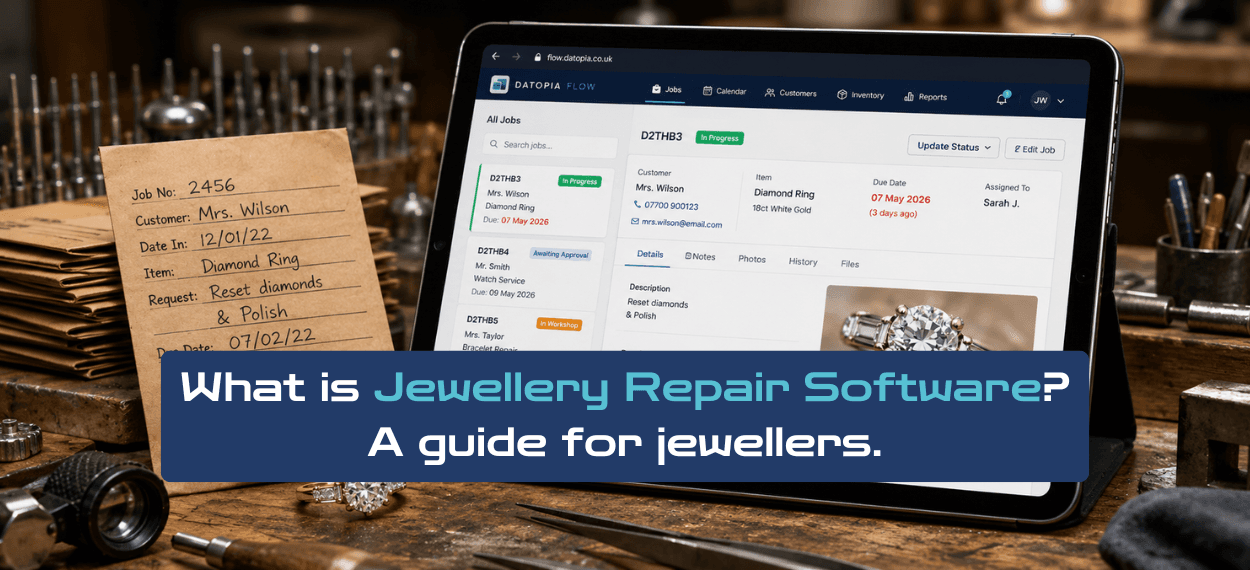
5 Signs Your Jewellery Workshop Needs Repair Tracking Software
Is your repair process relying on memory, paper packets and customer chasing? Here are five signs your jewellery workshop may need repair tracking software.

Jewellery repair tracking software helps jewellers, watchmakers and workshops keep repair jobs organised from intake to collection. It gives your team one place to see what the job is, where it is, when it is due, who is handling it and what has already been recorded.
If your current repair process works perfectly, you may not need to change it. But if your team is relying on memory, handwritten packets, scattered photos or customer chasing, it may be time to look at Datopia Flow, or compare the practical repair tools on the Datopia Flow features page.
If two or more of these signs feel familiar, your repair process may not just be busy. It may be relying on too much memory, too much paper and too many unwritten habits. That does not mean your team is doing anything wrong. It means they may not have a clear enough system around them.
Talk to Datopia about Flow
TL;DR
- If your team regularly says “it’s here somewhere”, your repair process may need a clearer system.
- If jobs do not always have before-photos or condition records, your business has less protection if a customer later queries the item.
- If customers are calling for updates and staff need to search for answers, the repair record is not easy enough to access.
- If you cannot see overdue or upcoming repairs at a glance, jobs can slip before anyone notices.
- If a customer returns with a problem and nobody knows whether it is the same repair or a new job, your repair history needs tightening.
- Datopia Flow helps by keeping repair records, photos, statuses, due dates, QR job labels and job history together in a system designed to feel natural for jewellery teams.
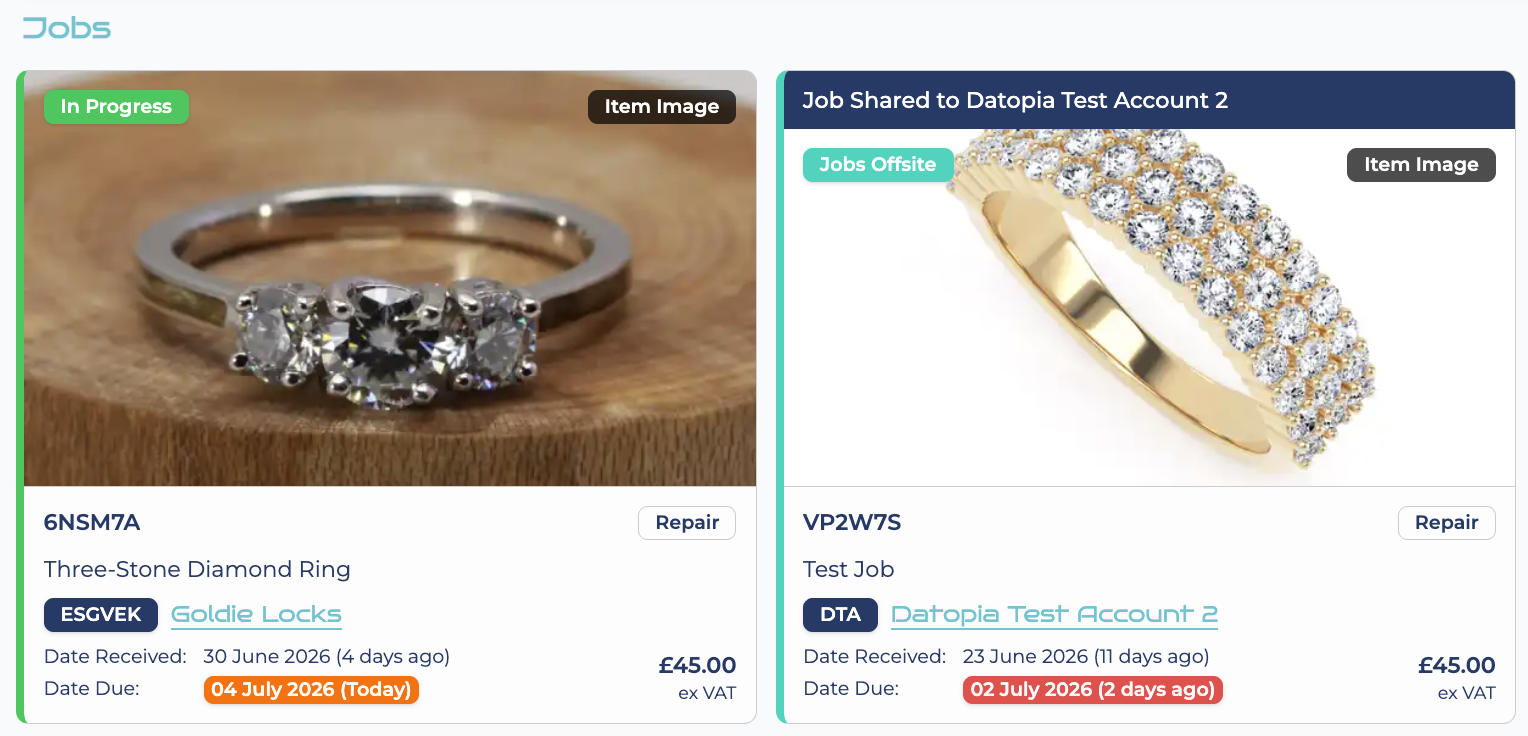
1. “It’s Here Somewhere” Has Become Part of the Process
If staff regularly have to search for packets, trays, notes or messages before they can answer a basic repair question, your workshop may need repair tracking software.
In a busy jewellery shop, repair jobs move. They can start at the counter, move to the workshop, wait for approval, go to a trade partner, return for checking and then wait for collection. If the only reliable record is attached to a physical packet, the whole team depends on finding that packet first.
That might work when repair volume is low. It becomes harder when several people handle the same job.
It also makes training harder. If a new team member needs weeks to learn where things are kept, what each note means and who usually knows the answer, the repair process is living in people’s heads rather than in a system the whole team can trust.
Datopia Flow gives each repair a searchable digital record, so your team can quickly find the job even when the physical item is somewhere else in the process. It has also been shaped by real jewellery workshop feedback, with users describing it as intuitive, easy to use and laid out in a way that feels natural without hours of training.
The problem is not that paper packets are bad. The problem is when the packet is the only place the answer lives.
2. Not Every Job Has Before-Photos or Condition Records
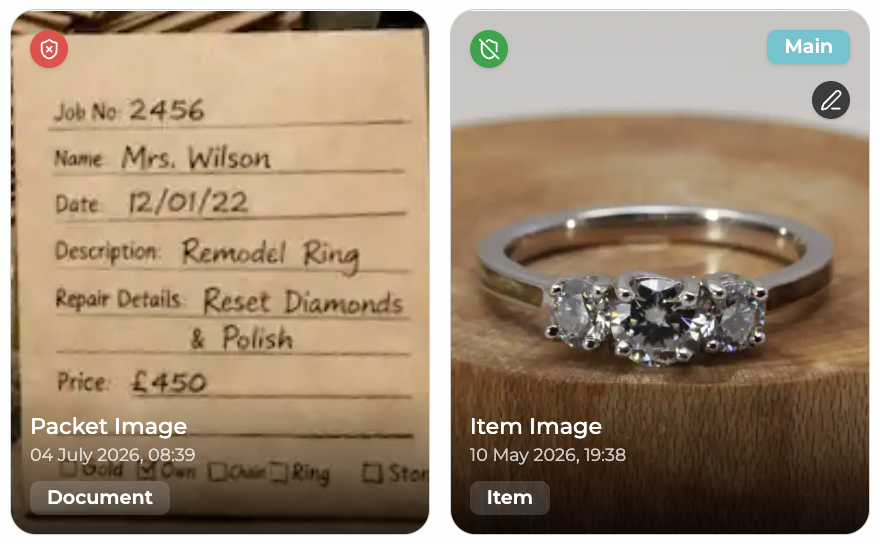
If some repairs start without clear photos or condition notes, your business has less protection if a customer later queries damage, marks, missing stones or item condition.
Before-photos are not just nice documentation. They help record what was handed over, what condition it was in and what identifying features were visible before work began.
That matters for:
- rings with existing wear
- watches with scratches or dents
- chains with weak links
- stones that appear loose or damaged
- sentimental items where the customer may remember details differently later
The same applies to the agreed repair scope. If a customer later queries what was requested, quoted or recorded at intake, your team should not have to rely on memory or loose paperwork.
With Datopia Flow’s repair record features, photos and uploaded packet images can sit with the job itself, instead of being scattered across phones, messages or folders.
3. Customers Are Calling for Updates Before Your Team Knows the Answer
Customer update calls are normal. Daily “is it ready yet?” interruptions are different.
If a customer calls and your first response is to ask the workshop, find a packet or check with another colleague, the repair information is not easy enough to get to. Every update then takes staff away from the counter, interrupts bench work or depends on the one person who happens to know the answer.
Repair tracking software helps your team answer faster by making the current status, due date, notes and job history easier to find. Even if the customer still needs a personal response, the staff member can give that response with more confidence.
Datopia Flow is designed to help retail and workshop teams see the same repair information, reducing the gap between what the customer asks and what the team can immediately answer.
Ask how Datopia Flow can help with repair updates
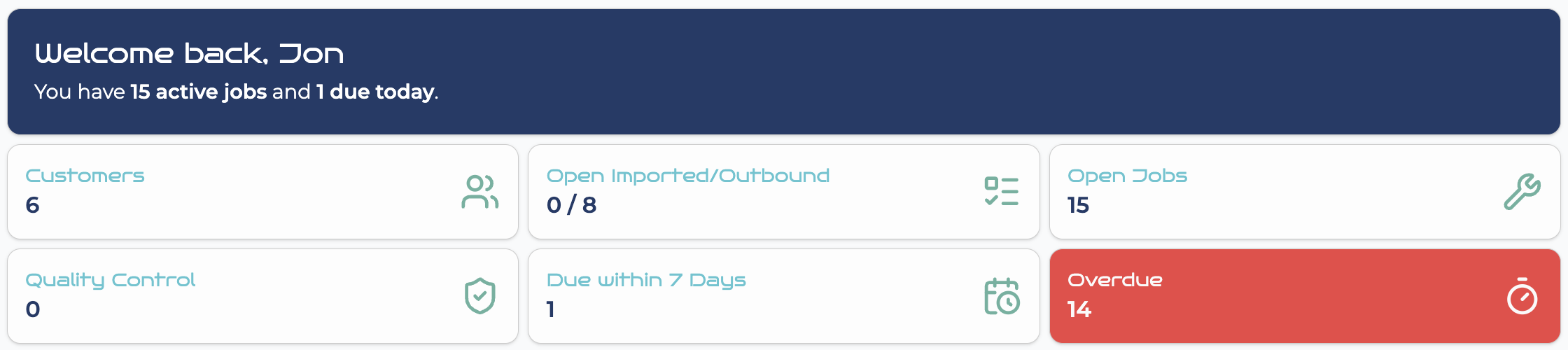
4. You Cannot See Overdue or Upcoming Repairs at a Glance
If overdue repairs are only spotted when a customer chases, your workshop needs a clearer way to see what needs doing next.
A good repair process should make it easy to see:
- which jobs are due soon
- which jobs are overdue
- which jobs are waiting on approval
- which jobs are still in progress
- which jobs are ready for collection
This is where spreadsheets and paper systems often become strained. They may hold the information, but they do not always make the next action obvious.
Datopia Flow’s features are built around practical workshop control, including statuses, due dates, job lists and repair records that help staff spot what needs attention.
5. A Customer Comes Back — But Is It the Same Repair or a New Job?
If a customer returns with an item and your team cannot quickly see previous repair history, it becomes harder to know what happened before.
This can matter when a customer says:
- “You repaired this last month.”
- “This is the same problem again.”
- “The stone was not like that before.”
- “I think this was part of the original repair.”
- “Someone here told me it would be covered.”
Without a clear repair history, staff may need to rely on memory, old packets, disconnected notes or a colleague who is not available.
Repair tracking software gives your team a better record of previous work, photos, statuses and notes. That helps you understand whether the customer has returned with the same issue, a related issue or a completely new repair.
Repair history protects the business, but it also helps the customer feel properly remembered.
How Does Datopia Flow Fix These Problems?
Datopia Flow is jewellery repair tracking software built around the real way repair jobs move through a jewellery shop or workshop.
It helps your team keep the important repair information together, including:
- customer and repair records
- job descriptions and workshop notes
- repair statuses
- due dates
- before-photos and uploaded packet images
- QR job labels for fast lookup
- job history
- batch and bulk actions
- trade partner job sharing
- clearer communication between counter and workshop
Datopia Flow is not designed to replace every system in your jewellery business. It is focused on making repair tracking easier to follow, easier to update and easier for the whole team to trust.
You can explore more on the Datopia Flow features page, see common Datopia Flow use cases, or check Datopia Flow pricing.
FAQs
What is jewellery repair tracking software?
Jewellery repair tracking software is a system that helps jewellers record, find and update repair jobs from intake to collection.
It usually stores repair details, customer information, photos, due dates, statuses, notes and job history so staff can see what is happening without relying only on paper packets or memory.
How do jewellers track repair jobs?
Jewellers often track repair jobs using handwritten packets, envelopes, spreadsheets, POS notes, workshop notebooks or dedicated repair tracking software.
Paper can still be useful, especially in a busy workshop. The issue is when paper becomes the only source of truth and repair information is hard to search, share or back up.
When should a jeweller move from paper to repair tracking software?
A jeweller should consider repair tracking software when jobs are hard to find, updates take too long, photos are missing, overdue repairs are not visible or repair history is difficult to retrieve.
The aim does not have to be going fully paperless. A hybrid process can keep physical packets while storing the key repair information digitally.
Is Datopia Flow easy for workshop staff to learn?
Yes. Datopia Flow is designed to feel intuitive for jewellery teams, with repair features laid out in a natural way.
That helps reduce the learning curve, so staff can start using the repair records, statuses, photos, due dates and job lookup tools without hours of training.
Can Datopia Flow work with handwritten repair packets?
Yes. Datopia Flow can support workshops that still use handwritten repair packets.
A packet can remain part of the physical process, while Datopia Flow stores the searchable job record, photos, due dates, statuses, QR labels and repair history.
Ready to Make Jewellery Repair Tracking Easier?
If your workshop is losing time to missing packets, unclear job statuses, customer update calls, overdue repairs or patchy repair history, your team may simply need a clearer system around them.
Datopia Flow helps jewellers and watchmakers keep repair jobs easier to find, update and trust.
Discuss Datopia Flow for your workshop